San Luis Rey sits in the northern part of Oceanside with many single-story homes built between the 1950s and 1970s that use stucco over wood framing and have shallow crawl spaces. These older builds often develop slow leaks at roof valleys or around window frames during the winter rains that move through the San Luis Rey River valley. When moisture sits against drywall or subfloor for weeks, black mold colonies form behind baseboards and inside wall cavities before any visible spots appear on the surface.
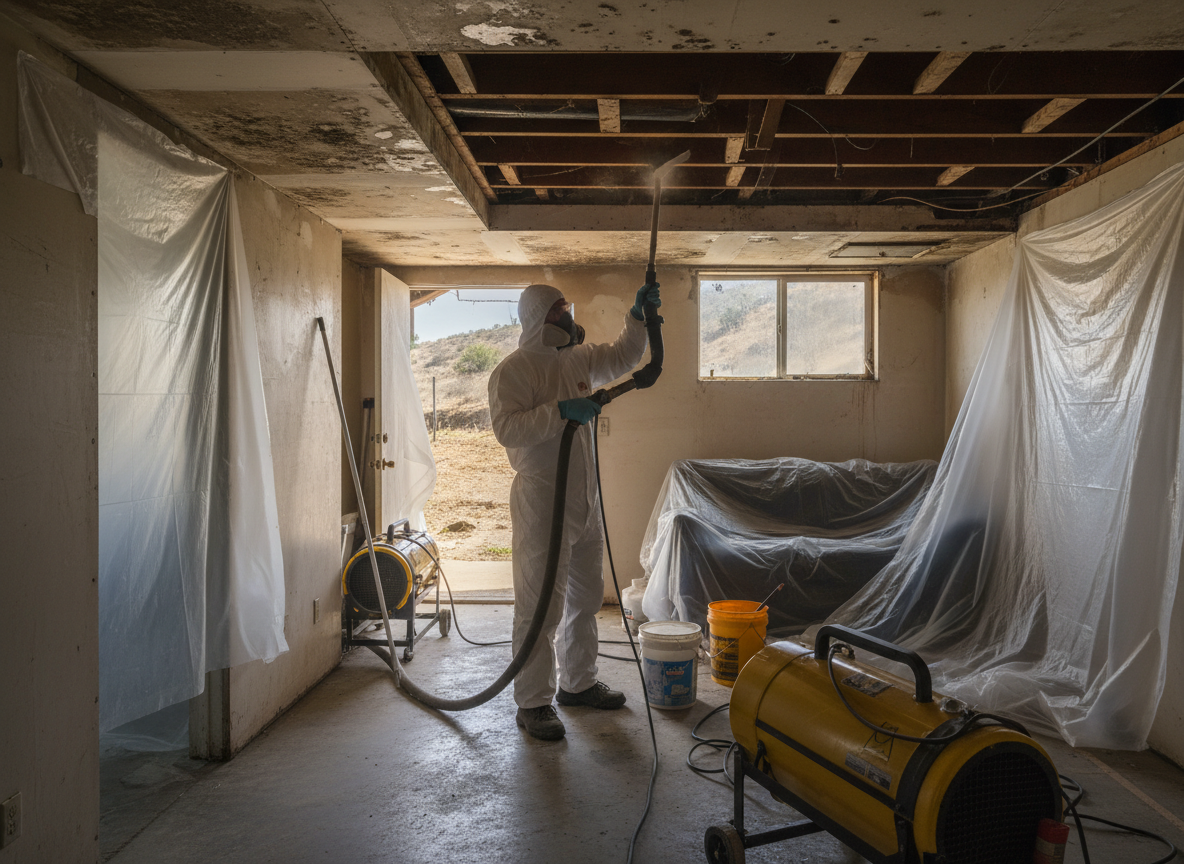
Affordable remediation here starts with moisture mapping using pin and pinless meters rather than blanket removal. Technicians isolate the affected zone with plastic sheeting and negative air machines to keep spores from drifting into living areas, then cut out only the damp sections of drywall or insulation. In many Mission Avenue corridor homes the source is a cracked sewer cleanout or poor grading that channels water toward the foundation, so the job includes directing the owner to the exact plumbing or grading fix needed before any new material goes back in.
After removal the team applies an EPA-registered antimicrobial to the exposed framing and runs dehumidifiers until wood moisture content drops below 12 percent. Follow-up visits check that the original leak path stays dry, which prevents repeat growth common in this coastal microclimate where morning fog keeps relative humidity elevated for months. Homeowners receive a written scope that lists exactly which rooms were treated and what materials were discarded so insurance or resale paperwork stays straightforward.
Technician insight
In San Luis Rey the thing that catches most people out with affordable mold remediation is the 1960s stucco homes along Mission Avenue where roof runoff pools against the slab edge and travels under the base plate into the crawl space before anyone smells it.
Crawl-Space Mold After Winter Rains
A San Luis Rey homeowner noticed a musty smell in the hallway after several days of rain. Inspection found water entering at the foundation edge from poor grading and traveling under the subfloor. The crew isolated the hallway, removed wet insulation, treated the joists, and directed the owner to re-grade the soil line before reinstalling flooring.
How it works
- 1
On-Site Inspection
Technician measures moisture levels in walls, floors, and ceilings, identifies the water source, and marks the exact boundaries of affected material.
- 2
Containment Setup
Plastic barriers and negative air machines isolate the work zone so spores do not spread to unaffected rooms.
- 3
Removal and Cleaning
Damp drywall, insulation, and baseboards are cut out and bagged; framing is treated with antimicrobial solution and HEPA vacuumed.
- 4
Drying Verification
Dehumidifiers run until wood and drywall moisture readings fall below 12 percent, then a final walkthrough confirms the area is clear.
Pricing
Upfront written estimate after inspection; cost varies with square footage affected and whether hidden wall or crawl-space work is required.