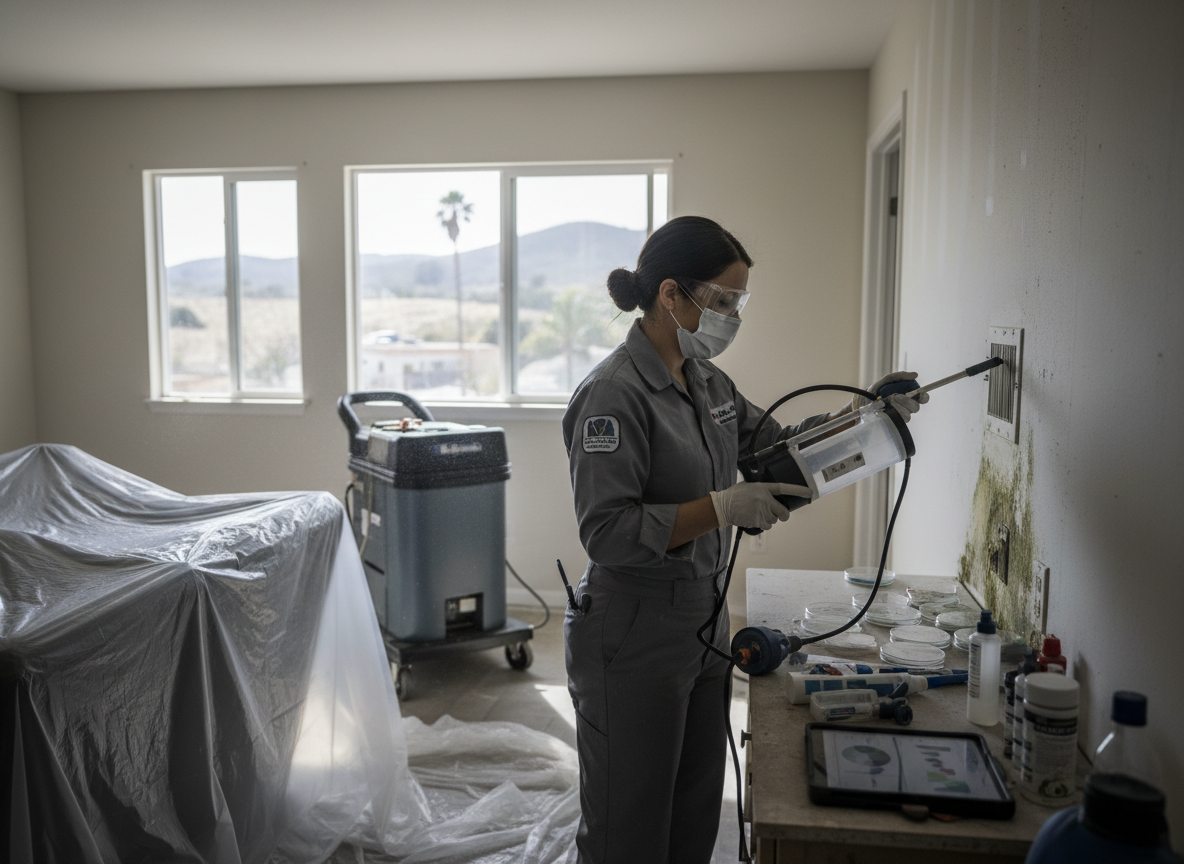
Air quality and mold testing in San Luis Rey starts with understanding how older housing stock along Mission Avenue and surrounding neighborhoods traps moisture in walls and crawl spaces. Homes built before modern vapor barriers often develop hidden growth after roof leaks or poor ventilation, especially where seasonal fog rolls in from the coast. Technicians collect air samples from multiple rooms plus surface swabs in suspected areas, then send them to an independent lab for species identification rather than relying on visual guesses.
Edge cases appear frequently in San Luis Rey when testing reveals elevated spore counts but no visible mold on drywall. This happens in single-story ranch homes where ductwork runs through unconditioned attics and pulls in outdoor particulates. Proper testing includes checking HVAC systems and taking clearance samples after any prior water event to confirm levels have returned to normal before reoccupancy.
San Diego County building practices mean many San Luis Rey properties still use original plaster or lath-and-plaster construction that can hold moisture for months without obvious signs. Testing protocols account for this by taking baseline outdoor samples for comparison and documenting pressure differentials that push contaminants through living spaces. Homeowners receive a written report with chain-of-custody details and recommended next steps rather than a simple pass-fail result.
Technician insight
In San Luis Rey, the thing that catches most people out with air quality and mold testing is moisture trapped behind the original plaster in 1950s homes near Mission Avenue that only shows up when you pull baseboards or run air sampling under negative pressure.
Hidden Spores in a San Luis Rey Ranch Home
A homeowner on Mission Avenue noticed musty smells after heavy winter rains but saw no visible growth. Testing found elevated aspergillus levels in the living room air while surface samples stayed clean. Additional samples from the attic revealed a small roof leak wetting insulation above the HVAC return. The report guided targeted removal and confirmed clearance after repairs.
How it works
- 1
Initial Assessment
Review property history and current concerns over the phone or on site at the San Luis Rey address.
- 2
Visual Inspection
Examine accessible areas including attics, crawl spaces, and HVAC returns for moisture indicators.
- 3
Sample Collection
Take air, surface, and bulk samples from targeted locations inside the home and one outdoor control.
- 4
Lab Analysis and Report
Submit samples for independent analysis and deliver a detailed written report with findings and recommendations.
Pricing
Cost depends on square footage, number of samples, and whether HVAC or crawl-space access is required.