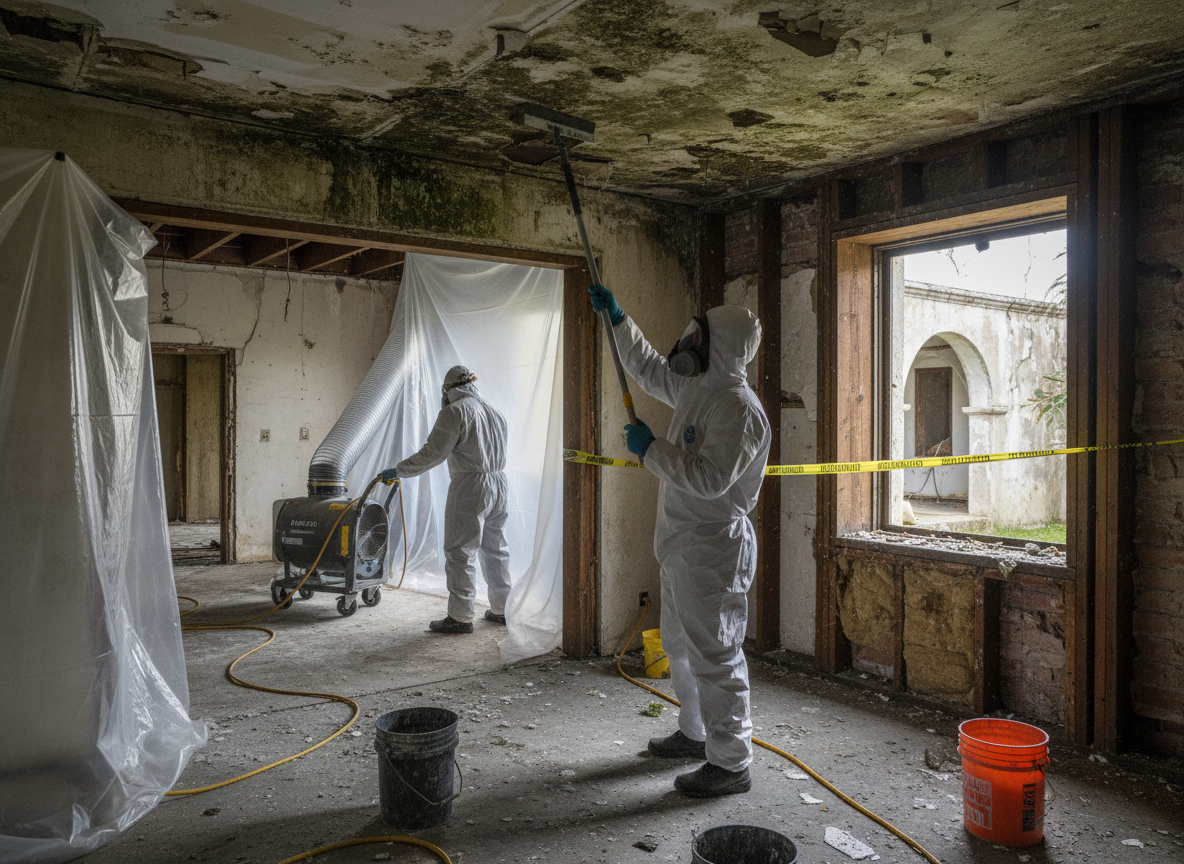
San Luis Rey sits along the San Luis Rey River corridor in northern San Diego County, where winter rains and persistent marine layer humidity create repeated moisture intrusion points in older stucco and wood-frame homes. Many properties here date from the 1960s through 1980s, with slab foundations and limited crawlspace ventilation that allow hidden mold to develop behind baseboards and in wall cavities after even minor leaks. Remediation crews must account for these construction details when mapping airflow and deciding whether to remove drywall sections or treat encapsulated areas without disturbing lead paint layers common in that era.
Local terrain near Mission Avenue and the riverbed means seasonal flooding can push water under structures, especially in single-story ranch homes where grading slopes toward the foundation. Technicians routinely find mold colonies in HVAC ducts that pull humid air from coastal fog, requiring negative-air machines and HEPA filtration to prevent cross-contamination into living spaces. Post-remediation verification includes moisture meter readings on concrete slabs and wood framing because residual dampness from the river-influenced water table often restarts growth within weeks if not fully dried.
Work in the San Luis Rey area also involves coordination with local building practices that favor enclosed patios and attached garages, both frequent entry points for rainwater. Containment barriers must be sealed tightly around these additions to keep spores from migrating into the main living areas during removal. Crews document every step with photos because insurance adjusters in Oceanside and Vista frequently request proof that affected materials were removed rather than simply treated with surface sprays.
Technician insight
In San Luis Rey, the thing that catches most people out with mold remediation company is older slab homes near the river where the marine layer keeps the concrete damp for weeks after rain. Homeowners often think wiping visible spots on baseboards is enough, but the moisture travels under the slab edge and restarts growth in the wall cavity within a month.
River-adjacent home with recurring wall growth
After winter rains, a San Luis Rey homeowner noticed musty odor along an exterior wall. Inspection found water had wicked under the slab from the nearby riverbed, feeding mold inside the drywall. Crews removed the lower two feet of drywall, dried the slab edge with targeted equipment, and installed a vapor barrier. No growth returned after the next rain cycle.
How it works
- 1
Initial Assessment
Technician inspects all accessible areas including attics, crawlspaces, and wall cavities using moisture meters and borescopes to locate active growth and water sources.
- 2
Containment Setup
Plastic barriers and negative air machines isolate the work zone so spores do not spread to unaffected rooms during removal.
- 3
Material Removal and Cleaning
Porous materials with visible mold are removed; non-porous surfaces are cleaned with EPA-registered antimicrobials followed by HEPA vacuuming.
- 4
Drying and Verification
Dehumidifiers and air movers dry the structure to below 15 percent moisture content, then clearance testing confirms levels meet industry standards.
- 5
Final Documentation
Photos, moisture logs, and a written report are provided for homeowner records and any insurance submission.
Pricing
Cost depends on square footage affected, depth of hidden growth, and drying time required; upfront quotes provided after inspection.