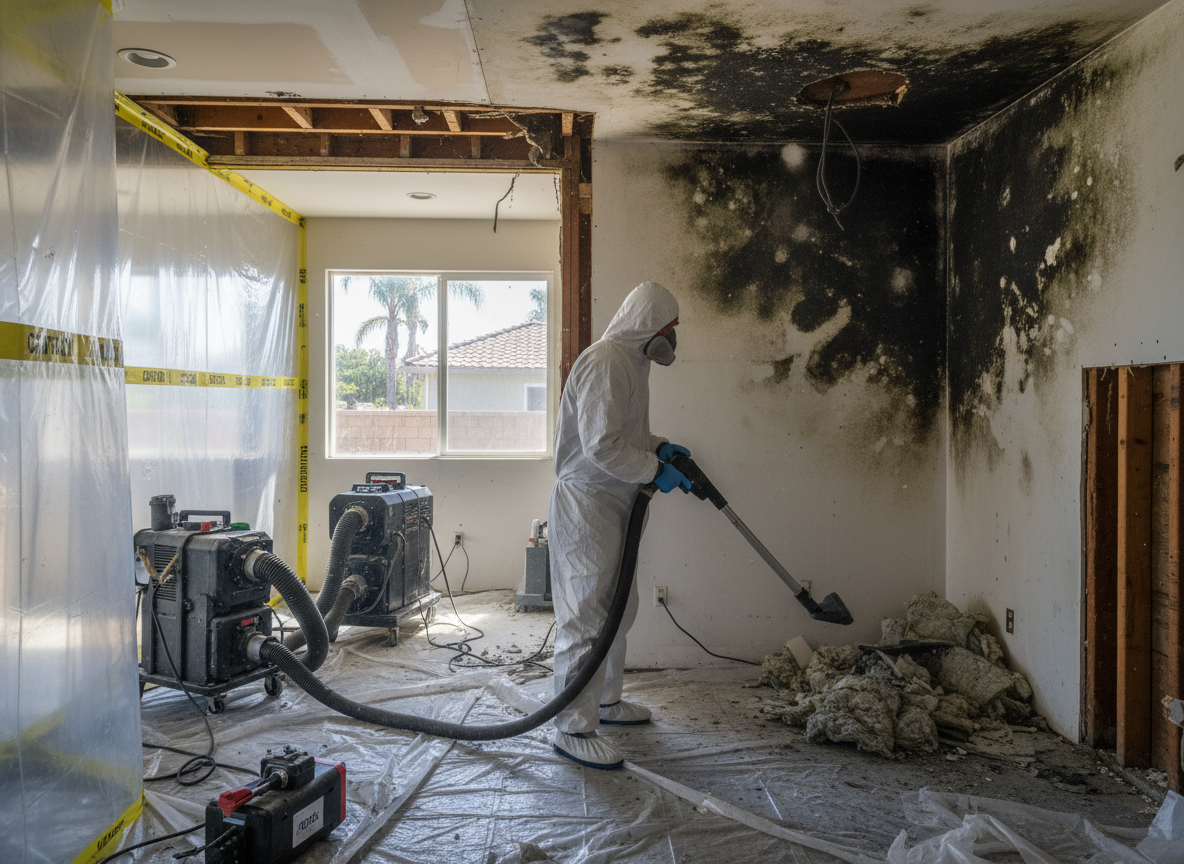
San Luis Rey sits along the river corridor where seasonal moisture from winter rains and coastal humidity regularly finds its way into crawl spaces and slab edges of homes built from the 1950s onward. We see repeated growth behind baseboards and under vinyl flooring when drainage around older foundations fails during heavy runoff. Containment protocols must account for the tight floor plans common in these neighborhoods so we avoid spreading spores into living areas during removal.
Hidden growth often appears in laundry rooms and bathrooms where original plumbing penetrations were never sealed properly against the damp air that moves inland from the coast. We pull affected drywall in sections rather than whole walls when the infestation stays localized, then treat exposed framing with antimicrobial solutions rated for the wood species used in mid-century construction here. Post-remediation air sampling confirms clearance before we close up, because re-wetting from the next storm can restart the cycle in untreated cavities.
Residents near Mission Avenue and the surrounding blocks frequently call after noticing musty odors following the first rains of the season. We map moisture with thermal imaging across concrete slabs and wooden subfloors before any demolition begins, because removing only visible mold leaves colonies alive in adjacent joist bays. Every job ends with a written moisture source correction plan so the homeowner can address grading or gutter extensions before winter returns.
Technician insight
In San Luis Rey the thing that catches most people out with mold remediation near me is how the river corridor keeps feeding humidity into crawl spaces of 1960s slab homes even after we remove the visible growth; if the homeowner skips the grading fix we recommend, the same wall will light up again by the next winter rains.
River-adjacent home after winter rains
A homeowner near Mission Avenue noticed a musty smell in the hallway after heavy runoff. We found growth along the slab edge where the original vapor barrier had torn. We contained the hallway, removed the base layer of drywall and underlayment, treated the joists, and dried the space for four days. Clearance samples passed and we left a plan for extending downspouts away from the foundation.
How it works
- 1
Initial Assessment
We arrive within hours, inspect all affected rooms plus adjacent spaces, and document moisture readings with meters and imaging.
- 2
Containment Setup
Plastic barriers and negative air machines isolate the work zone to prevent spore migration into clean areas of the home.
- 3
Removal and Treatment
We remove porous materials showing growth, clean hard surfaces, and apply EPA-registered antimicrobials to framing and subfloors.
- 4
Drying and Clearance
Industrial dehumidifiers and air movers bring moisture below 15 percent, followed by independent air sampling for clearance.
- 5
Source Correction Guidance
We provide a written plan addressing grading, gutters, or ventilation changes needed to limit future moisture intrusion.
Pricing
Cost depends on square footage affected, depth of hidden growth, and drying time required; we provide a written scope after inspection.