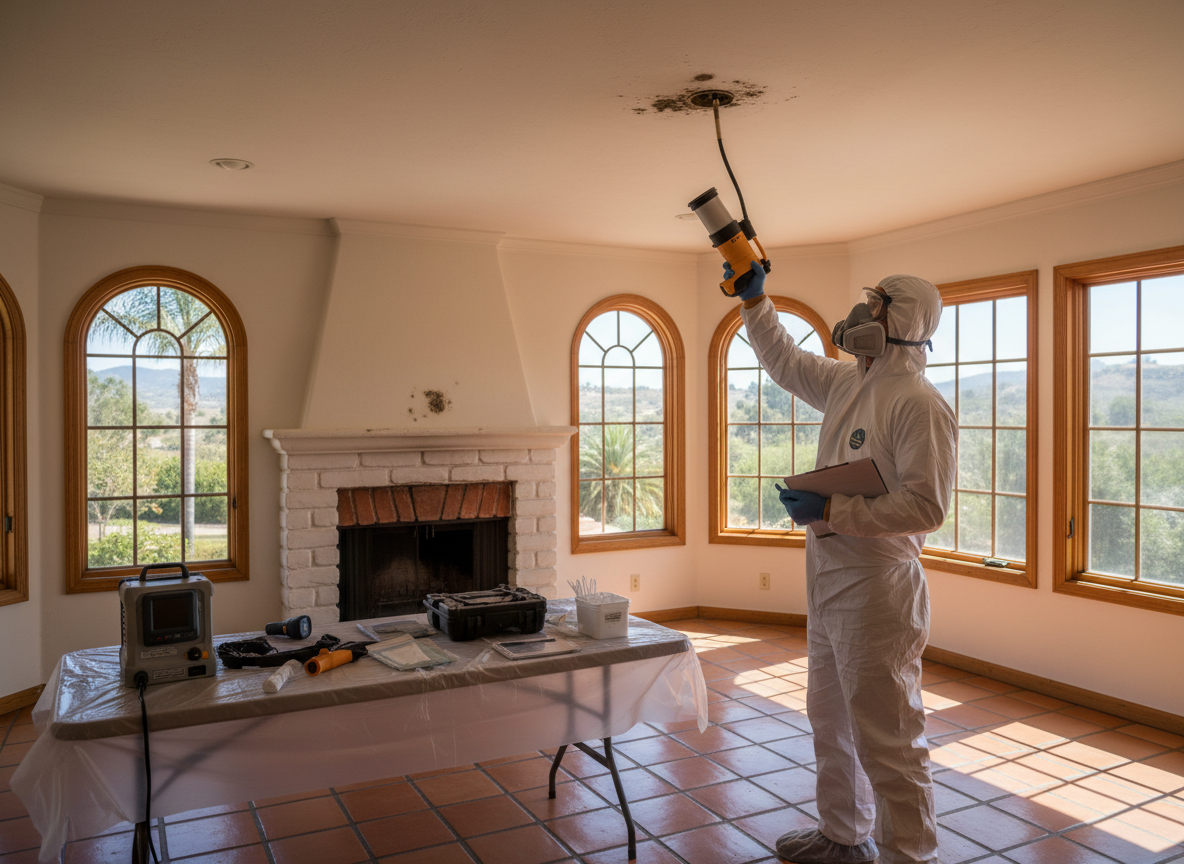
Residential mold testing in San Luis Rey starts with visual inspection of attics, crawl spaces, and wall cavities common in homes near Mission Avenue and the historic mission district. Technicians collect air samples from multiple rooms plus outdoor controls, then surface swabs from drywall, baseboards, and HVAC registers where moisture from seasonal coastal fog often lingers. Results identify species and concentration levels that guide whether remediation is required under San Diego County guidelines.
Older single-family homes in San Luis Rey frequently have original plaster and lath or early drywall that traps hidden moisture behind bathroom showers and laundry rooms. Testing protocols account for these materials by using borescopes through small inspection holes rather than destructive cuts. Edge cases include post-rainwater intrusion along the San Luis Rey River corridor, where elevated humidity can produce intermittent growth that standard homeowner tests miss.
Testing reports include chain-of-custody documentation and lab analysis from accredited facilities serving the North County area. Homeowners receive clear explanations of spore counts relative to outdoor baselines, plus recommendations on when to involve remediation crews versus simple moisture correction. This approach prevents unnecessary work while flagging genuine issues before they spread to adjacent properties.
Technician insight
In San Luis Rey the thing that catches most people out with residential mold testing is older stucco homes along Mission Avenue that have poor roof drainage and no vapor barriers; the coastal fog keeps framing damp for weeks after rain, so a single surface sample often misses growth behind the plaster that only shows up once we pull baseboards or use a moisture meter in multiple spots.
Hidden Growth Behind Bathroom Wall
A San Luis Rey homeowner noticed musty smell after winter rains but no visible spots. Testing located elevated aspergillus levels in the master bath. Samples confirmed moisture trapped behind original tile from a slow shower leak. We isolated the source, provided the report, and the owner arranged targeted repairs before growth reached the hallway drywall.
How it works
- 1
Initial Consultation
Discuss visible signs, recent leaks, and home layout over the phone or at 4050 Mission Ave before scheduling an on-site visit.
- 2
On-Site Sampling
Collect air and surface samples from affected and unaffected zones, plus an outdoor control, using calibrated equipment.
- 3
Laboratory Analysis
Submit samples to a third-party lab for species identification and concentration reporting.
- 4
Findings Review
Explain results in plain language with photos and specific next-step options based on the home's construction.
Pricing
Cost depends on number of samples, home size, and access difficulty; quotes provided after initial consultation.