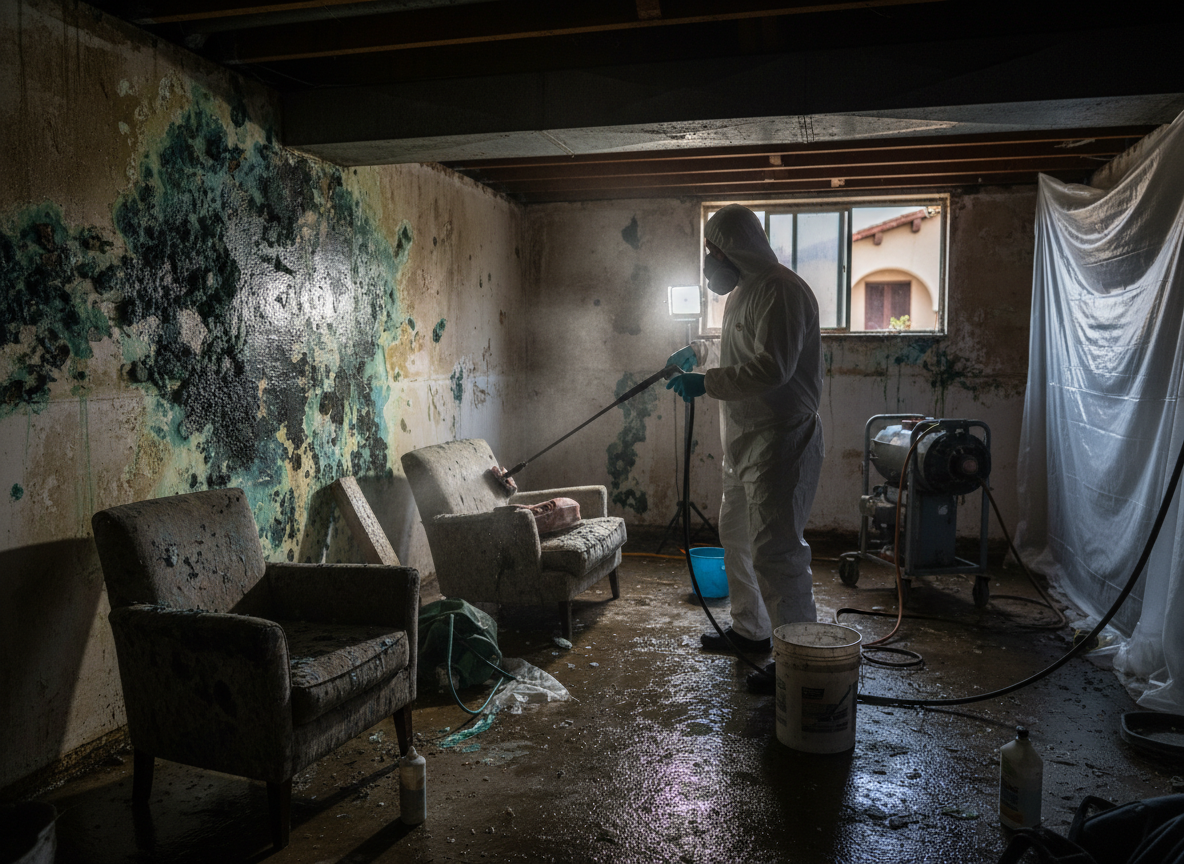
Toxic mold removal in San Luis Rey often involves older single-family homes built before modern moisture barriers, where black mold takes hold behind drywall or in attics after roof leaks. Crews must isolate affected rooms with containment barriers and use negative air machines to prevent spores from spreading into living spaces during demolition. San Luis Rey's mix of coastal humidity and occasional heavy winter rains accelerates growth in poorly ventilated crawl spaces common in the area's ranch-style houses.
Removal work requires HEPA vacuuming of all surfaces followed by antimicrobial treatment on framing and subfloors. Technicians check for hidden colonies in HVAC ducts, which are frequent in San Luis Rey homes because many systems were installed decades ago without proper filtration. Any porous materials showing visible growth get bagged and removed to prevent cross-contamination during transport through the property.
After physical removal, moisture meters and thermal imaging confirm the source is eliminated before new drywall or insulation is installed. Local building practices in the San Luis Rey area sometimes leave gaps around plumbing penetrations that allow recurring water intrusion, so final inspections focus on these details to avoid repeat issues.
Homeowners in San Luis Rey should avoid disturbing visible mold themselves, as disturbing colonies without containment can spread spores into previously unaffected rooms and HVAC systems.
Technician insight
In San Luis Rey the thing that catches most people out with toxic mold removal is hidden growth along the stucco-to-wood transitions on older homes near Mission Avenue. Those seams let rain seep behind siding for years before any visible stain appears inside, so the job often expands once we open the wall.
Hidden Growth Behind Kitchen Cabinets
A San Luis Rey homeowner noticed a musty smell after winter rains. Inspection found water had entered through a roof valley and traveled down the wall into the kitchen. We contained the room, removed the lower cabinets and drywall, treated the framing, and dried the cavity. Post-testing cleared the space and the owner was able to reinstall cabinetry without further issues.
How it works
- 1
Initial Assessment
Technicians arrive at the San Luis Rey property and use moisture meters plus visual inspection to map all affected areas including attics and crawl spaces.
- 2
Containment Setup
Plastic barriers and negative air pressure isolate the work zone so spores do not migrate into clean sections of the home.
- 3
Removal and Cleaning
Contaminated materials are removed, surfaces are HEPA-vacuumed, and antimicrobial agents are applied to remaining structure.
- 4
Drying and Verification
Dehumidifiers and air movers dry the space, followed by post-remediation testing to confirm spore levels have returned to normal.
Pricing
Cost depends on square footage affected, depth of hidden growth in crawl spaces or attics, and whether HVAC cleaning is required.