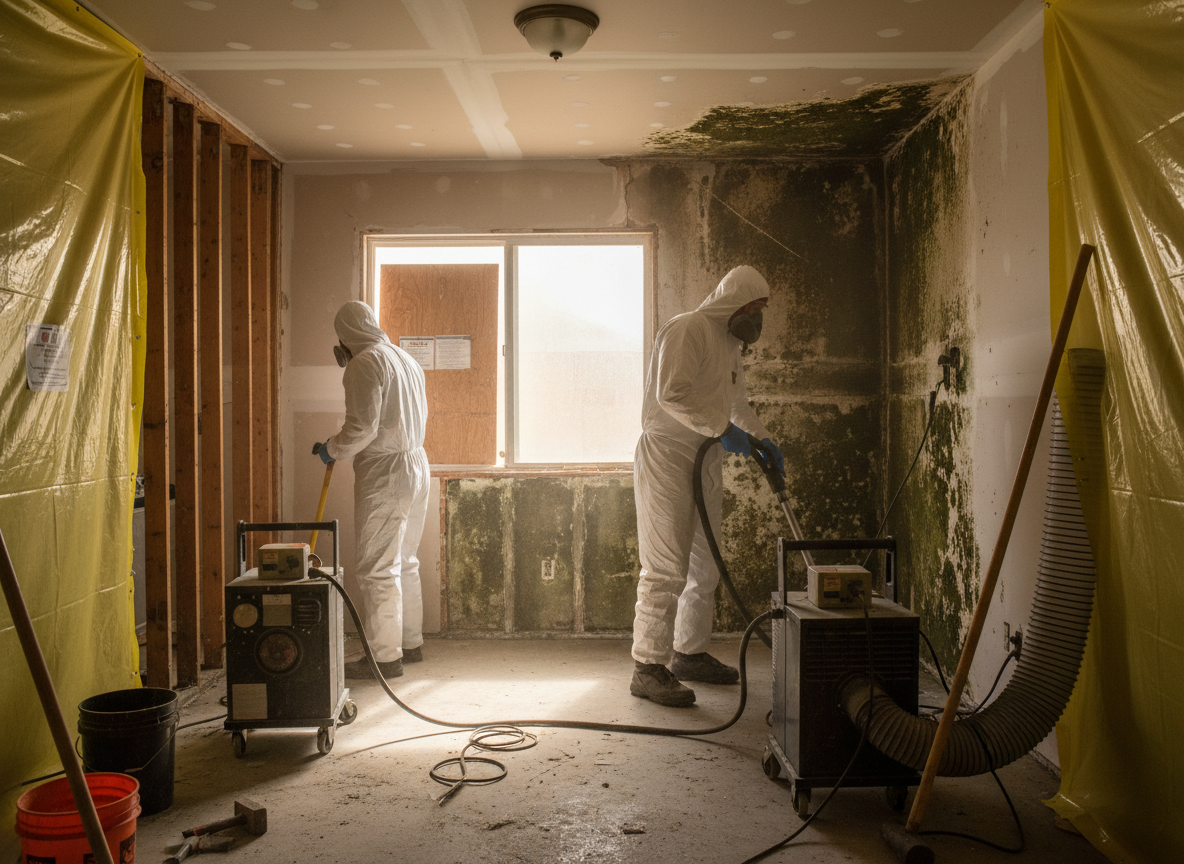
Water damage mold remediation in San Luis Rey often starts in crawl spaces and under older slab foundations common along Mission Avenue and near the river corridor. Moisture from seasonal rains or plumbing leaks travels through stucco walls and into insulation, creating hidden growth behind baseboards that standard drying fans miss. Technicians must map moisture with meters before any removal to avoid pushing spores into HVAC systems that serve the single-story ranch homes typical in this zip code.
Edge cases here include mold returning in attics after roof leaks during Santa Ana winds, when rapid pressure changes pull contaminated air through unsealed soffits. Containment with negative air machines and HEPA filtration is required before cutting drywall, especially in homes built before 1980 that may contain asbestos in textured ceilings. Skipping this step risks spreading spores into living areas and triggering health complaints from residents already dealing with high regional pollen counts.
After removal, drying protocols must account for the clay-heavy soils around San Luis Rey that hold water against foundations for weeks. Dehumidifiers run longer than in inland San Diego County spots, and follow-up checks at 48 and 72 hours confirm wood moisture content stays below 15 percent. Homeowners who skip these checks often see black spots reappear in the same wall cavities within a month.
Technician insight
In San Luis Rey, the thing that catches most people out with water damage mold remediation is the way river-adjacent clay soil keeps foundations damp for weeks after rain, letting mold regrow in crawl spaces under homes near Mission Ave if drying stops too soon.
Hidden Leak Under San Luis Rey Ranch Home
A homeowner noticed musty odors in the hallway after winter rains. Inspection found a slow pipe leak soaking the subfloor and insulation in the crawl space. Crew contained the area, removed wet materials, ran dehumidifiers for four days, and confirmed dry readings before closing the walls.
How it works
- 1
Initial Inspection
Technicians arrive within hours, use moisture meters and thermal cameras to locate hidden water in walls, floors, and crawl spaces around the 4050 Mission Ave service area.
- 2
Containment Setup
Plastic barriers and negative air machines isolate the affected zone to prevent spore migration into clean areas of the home.
- 3
Removal and Cleaning
Damaged materials are cut out, surfaces are treated with antimicrobial agents, and debris is bagged for disposal before HEPA vacuuming.
- 4
Drying and Verification
Industrial dehumidifiers and air movers run until readings confirm safe moisture levels, followed by a final clearance inspection.
Pricing
Pricing follows inspection findings on square footage affected, depth of water intrusion, and drying time required.